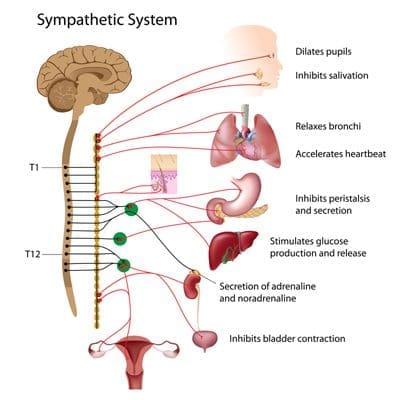
Depending on the location of the tumor and other factors, doctors use different tests to diagnose neuroblastoma. Often these texts include x-rays or other imaging, like CT scans or MRIs, to determine the location and size of the neuroblastoma tumor. In about 90% of neuroblastoma cases, tumor cells produce elevated levels of hormones. The hormones are broken down by the body into acids called HVA and VMA, which are eliminated from the body in the urine. To diagnose neuroblastoma, your child may need to give a urine sample to evaluate HVA and VMA levels. High HVA to VMA ratio may indicate an undifferentiated, unfavorable tumor whereas a high VMA level may represent a more differentiated, less aggressive tumor. In addition, a complete blood count (CBC) and chemistry panel will give more information about kidney and liver function.
Once doctors have located the tumor, they take a biopsy to confirm the diagnosis and to develop the best treatment plan. Doctors will perform surgery to remove either part or the entirety of the tumor. Following surgery, a healthcare team will identify the exact type of tumor and its particular characteristics. These factors are important in determining the best treatment for your child. In some children, neuroblastoma will have spread to the bone marrow by the time of diagnosis. To evaluate your child, the healthcare team will perform a bone marrow aspirate and a bone marrow biopsy on both hips.
Determining Treatment and Risk of Relapse
After your child undergoes testing to identify the extent of tumor present and to learn about the biology or characteristics of the tumor cells, the information gathered will determine the likelihood of a recurrence of disease after treatment. Neuroblastoma is classified as low-, intermediate- or high-risk disease. The risk of relapse of neuroblastoma tumor is determined by the biology of the cancer cells, rather than when the diagnosis is made.
The age of the child at diagnosis: many children under 18 months have “low risk” or “intermediate risk” disease, and the cancer is less likely to recur in these children.
Tumor Histopathology: Histopathology refers to the evaluation of tumor cells under a microscope. A pathologist will determine the type of cells in the tumor and will decide whether the tumor is neuroblastoma or one of the related, but less aggressive related tumors called ganglioneuroblastoma or ganglioneuroma.
MYCN Status: MCYN is a gene that is involved in regulation of the growth of some cells, including neuroblasts. Tumor cells are examined to determine the number of copies of the gene within the tumor cell. A single copy (non-amplified) is normal. Multiple copies of the MYCN gene (amplified) are associated with a more aggressive tumor type.
DNA Index: The DNA content (ploidy) of a tumor cell is compared to that of a normal cell. Normal cells have a DNA index of 1. A DNA index of more than 1 is associated with a better outcome in some groups of children with neuroblastoma.
Chromosomes: Certain consistent changes have been identified in the chromosomes of neuroblastoma tumor cells and their presence can help to determine a risk classification.
The stage of the disease: staging refers to the physical location of the primary tumor and the location of any secondary tumors (metastases).
Currently, tumors are categorized by two different systems, the International Neuroblastoma Staging System (INSS) and the newer International Neuroblastoma Risk Group (INRG).
INSS Stages
Stage 1: Tumor is confined to one area (localized) and can be completely removed through surgery. Nearby lymph nodes do not contain cancer cells.
Stage 2A: Tumor is localized and confined to one side of the body but cannot be completely removed. Nearby lymph nodes do not contain cancer cells.
Stage 2B: Tumor is localized and may or may not be completely removed. Nearby lymph nodes show cancer cells. Enlarged lymph nodes on the opposite side of the body do not contain cancer cells.
Stage 3: Must meet one of these two criteria:
Tumor starts in or crosses the vertical midline of the body (marked by the spine) and cannot be removed surgically. Lymph nodes in the area may or may not contain cancer cells.
Tumor is restricted to one side of the body but there are enlarged lymph nodes on the opposite side of the body that contain cancer cells.
Stage 4: The primary tumor(s) has spread to distant lymph nodes, bone, bone marrow, liver, skin and/or other organs.
Stage 4-S: The “S” stands for “special.” These tumors are unique in that they often disappear on their own (spontaneous regression) without any treatment. Must meet special criteria:
Child must be less than 12 months old.
Localized primary tumor that has spread only to the skin, lymph nodes or liver. Very small amounts of tumor may be seen in the bone marrow, but the disease cannot involve the outer portion of the bone (cortex).
INRG Stages
L1: Localized tumor not involving vital structures as defined by the list of image-defined risk factors. Tumor is confined to one body compartment.
L2: Locoregional tumor, which has one or more image-defined risk factors.
M: Distant metastatic disease
MS: Metastatic disease in children younger than 18 months with metastases confined to skin, liver, and/or bone marrow.
Understanding the risk for relapse is important because there are large differences between the treatments for low-risk, intermediate-risk and high-risk disease. In general, high-risk neuroblastomas are more likely to come back and therefore require stronger treatment than low- or intermediate-risk disease. Stronger treatment selected for high-risk disease has been shown to benefit patients; however, it also has more side effects. Therefore, risk assessment is an essential step in determining appropriate treatment.
International teams of neuroblastoma specialists have developed current treatment plans over several decades to carefully balance the benefits and risks of treatment and the chance that treatment will not be successful. Once your doctor has completed all the necessary tests and has assigned a risk category for your child, focus your attention on that particular risk group’s treatment section.
Risk of Relapse Groups
Low-risk patients have about a 95% probability of survival. Low-risk disease has the following characteristics:
Any age with Stage I (completely removed) disease
Stage II disease with non-amplified MYCN and > 50% of the tumor is removed by the surgeon
Stage IV-S disease with non-amplified MYCN, DNA index >1, favorable histology and without symptoms (asymptomatic patients)
Intermediate-risk patients have a greater than 90% chance of survival. Intermediate-risk disease has the following characteristics:
Stage II disease with non-amplified MYCN but < 50% of the tumor was removed
Stage III disease in patients < 18 months and non-amplified MYCN
Stage III disease in patients > 18 months with non-amplified MYCN and favorable histology
Stage IV disease in patients < 12 months with non-amplified MYCN
Stage IV disease in patients 12 – 18 months with non-amplified MYCN, favorable histology and DNA index of >1
Stage IV-S disease, non-amplified MYCN and either unfavorable histology or a DNA index of 1
Stage IV-S disease, non-amplified MYCN, DNA index >1, favorable histology and with symptoms (symptomatic patients)
High-risk patients have a 40% chance of survival with current therapy. High-risk disease has the following characteristics:
Stage II, III, IV or IV-S disease with amplified MYCN
Stage III disease in patients > 18 months with unfavorable histology
Stage IV disease in patients 12 – 18 months with any one of the following: non-amplified MYCN, unfavorable histology or DNA index=1
Stage IV disease in patients >18 months
Pin It on Pinterest
Cookie Consent
We use cookies to improve your experience on our site. By using our site, you consent to cookies.
Contains information related to marketing campaigns of the user. These are shared with Google AdWords / Google Ads when the Google Ads and Google Analytics accounts are linked together.
90 days
__utma
ID used to identify users and sessions
2 years after last activity
__utmt
Used to monitor number of Google Analytics server requests
10 minutes
__utmb
Used to distinguish new sessions and visits. This cookie is set when the GA.js javascript library is loaded and there is no existing __utmb cookie. The cookie is updated every time data is sent to the Google Analytics server.
30 minutes after last activity
__utmc
Used only with old Urchin versions of Google Analytics and not with GA.js. Was used to distinguish between new sessions and visits at the end of a session.
End of session (browser)
__utmz
Contains information about the traffic source or campaign that directed user to the website. The cookie is set when the GA.js javascript is loaded and updated when data is sent to the Google Anaytics server
6 months after last activity
__utmv
Contains custom information set by the web developer via the _setCustomVar method in Google Analytics. This cookie is updated every time new data is sent to the Google Analytics server.
2 years after last activity
__utmx
Used to determine whether a user is included in an A / B or Multivariate test.
18 months
_ga
ID used to identify users
2 years
_gali
Used by Google Analytics to determine which links on a page are being clicked
30 seconds
_ga_
ID used to identify users
2 years
_gid
ID used to identify users for 24 hours after last activity
24 hours
_gat
Used to monitor number of Google Analytics server requests when using Google Tag Manager
1 minute
Marketing cookies are used to follow visitors to websites. The intention is to show ads that are relevant and engaging to the individual user.
Facebook Pixel is a web analytics service that tracks and reports website traffic.
Registers a unique ID on mobile devices to enable tracking based on geographical GPS location.
1 day
VISITOR_INFO1_LIVE
Tries to estimate the users' bandwidth on pages with integrated YouTube videos. Also used for marketing
179 days
PREF
This cookie stores your preferences and other information, in particular preferred language, how many search results you wish to be shown on your page, and whether or not you wish to have Google’s SafeSearch filter turned on.
10 years from set/ update
YSC
Registers a unique ID to keep statistics of what videos from YouTube the user has seen.
Session
DEVICE_INFO
Used to detect if the visitor has accepted the marketing category in the cookie banner. This cookie is necessary for GDPR-compliance of the website.
179 days
LOGIN_INFO
This cookie is used to play YouTube videos embedded on the website.
2 years
You can find more information in our Privacy Policy and .