Skip to content

Completed project

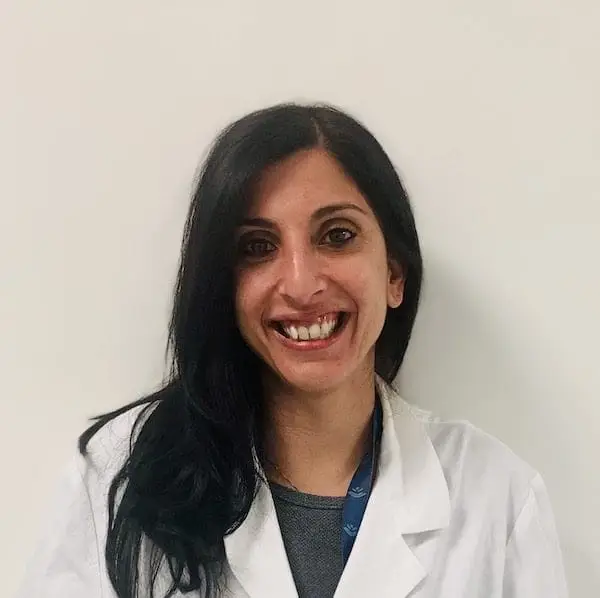
Francesca Nazio, PhD

University of Rome

Targeting autophagy to boost the immune response against medulloblastoma

Francesca Nazio, PhD, is a CureSearch Young Investigator conducting research at the Bambino Gesù Children’s Hospital to disrupt a process in medulloblastoma cells that not only promotes their survival but also enables them to escape anti-tumor immune responses.

CureSearch Young Investigator Award

2022–2025 · Medulloblastoma

Francesca Nazio, PhD

Approximately 18% to 20% of childhood brain tumors are medulloblastoma, making it the most common cancerous brain tumor in children. Most medulloblastomas occur in children under 16. More than 70% occur in children younger than 10. Survival in the most high-risk subtype of medulloblastoma, Group 3 medulloblastoma, ranges from 39% in infants to 50% in children. The tumor location as well as current treatments affect brain development causing neurological, neuropsychological, and physical disabilities – even into survivor adulthood.

Francesca Nazio, PhD, is a CureSearch Young Investigator conducting research at the Bambino Gesù Children’s Hospital to disrupt a process in medulloblastoma cells that not only promotes their survival but also enables them to escape anti-tumor immune responses. Natural killer (NK) cells, a part of the immune system, can target and destroy tumor cells. NK cells target medulloblastoma cells by attaching to proteins on the surface of the cancer cells. The ability of medulloblastoma to avoid detection by NK cells may be a mechanism by which medulloblastoma evades anti-tumor immune responses. Dr. Nazio aims to redirect homing of NK cells to medulloblastoma to reactivate the anti-tumor immune response. She will do so by blocking a process called autophagy. Cancer cells use the process of autophagy (self-eating) to survive even when nutrients are low and they receive signals to die. In addition to promoting cell survival, autophagy plays a role in deadening the immune response. Dr. Nazio proposes a novel concept in medulloblastoma immunotherapy that would bypass the harmful effects of traditional radiation and chemotherapy treatments by applying NK cell-mediated immunotherapy in combination with a therapeutic that stops the process of autophagy for the treatment of high-risk medulloblastoma. She hypothesizes that combining a drug that halts autophagy with an immunotherapy will offer a safer and more effective treatment for medulloblastoma than traditional radiation and chemotherapy.

Project at a glance

Program
Young Investigator Award
Institution
University of Rome
Focus
Medulloblastoma

Francesca Nazio, PhD

I am interested in studying the mechanisms regulating autophagy and immune-resistance in pediatric cancers and in transferring this knowledge into improved therapies for these patients. I have a solid background in molecular and cellular biology. During my PhD (at the University of Tor Vergata) and postdoctoral studies (at Santa Lucia Foundation), I have developed outstanding skills in cellular and molecular biology of autophagy, working under the guidance of Prof. Francesco Cecconi, a world-renown scientist in the autophagy field. As a young researcher, I investigated the molecular mechanisms of autophagy, publishing my first-author papers in high-impact peer-reviewed journals such as The Journal of Cell Biology or Nature Cell Biology; these publications have been recognized with great enthusiasm by the autophagy community.

During the last years under his mentorship, I had the opportunity to start my transition to independence. Indeed, I have coordinated and supervised the work of two PhD students and I also had the opportunity to expand my scientific knowledge by establishing collaborations in other research areas, as shown by several joint publications (9); also, I was awarded the Young Investigator Grant from the Italian Ministry of Health as Head of Unit (2014) in collaboration with a different laboratory. Through my studies, I have always been attracted by the possibility to translate knowledge from bench to bedside research. In 2017, when I joined the Department of Pediatric Hematology and Oncology led by Prof. Franco Locatelli, a well-renown expert in childhood hematological malignant and non-malignant disorders, at the Bambino Gesu Children Hospital, I got the opportunity to mark a clear direction for my future research interests. Here, I was awarded a Young Investigator Program Grant from the Italian Ministry of Health as Co-PI (2016) and very recently as PI (2020): by these grants I fully supported the salary of a post-graduate student, a Technical assistant and a PostDoc. Moreover, my scientific expertise, my rate of publications and the ability to efficiently conduct collaborations primed the Institute Head to directly support my independent research that provided my work a direct with funding continuity. The work of my team is focused on identifying autophagy-related therapeutic approaches to boost the immune system against pediatric solid tumors, by means of basic research methodologies, preclinical mouse models and CAR-T technology. I have gained specific experience in this field, and I have built closed collaborations with clinicians and immunologists, a strategy that gives me confidence I am heading in the right direction.

Follow the project’s progress.

Final Update

Dr. Nazio has made significant progress in understanding how medulloblastoma (MB) tumors evade the immune system and how to combat this using combination therapies.

Her research efforts have focused on autophagy, a process that helps cancer cells survive by avoiding detection from Natural Killer (NK) cells. She discovered that inhibiting the autophagy process makes tumors more visible to NK cells, enabling them to attack the cancer more effectively. In mouse models, Dr. Nazio found that NK cells alone were not enough to eliminate MB tumors; however, when combined with autophagy inhibitors, she demonstrated that tumor growth could be slowed. To further improve this approach, she engineered NK cells specifically designed to better target MB tumors. She then demonstrated that combining these enhanced NK cells with autophagy inhibitors reduced tumor size and led to increased survival in mice. These promising findings lay the groundwork for future clinical trials aimed at developing more effective treatments for children with high-risk MB.
Help move the next discovery forward

Research progress happens one milestone at a time.

Your support helps researchers test, refine, and advance better treatment ideas for children with cancer.

Ultimate Hike participants cheering together on the trail
Kids carrying a banner at a CureSearch Walk
Supporters holding a donation check from a local fundraiser
A young Ultimate Hike participant on the trail
A hiker wearing a backpack covered in CureSearch pins

Share Your Story

Every connection to CureSearch has a story. We’d love to hear yours.

Whether you’ve hiked, given, volunteered, or lived this journey yourself, your story is part of ours.

Share Your Story