Skip to content

By the Numbers

Turning your generosity into treatments for children

Every 80 seconds, a child is diagnosed with cancer.

Scientific progress is creating new possibilities every day, but those discoveries only matter if they reach the children who need them.

That is where CureSearch comes in.

More than numbers

Investing in people.
Advancing the science.
Reaching patients.

Our impact is measured not only in dollars invested, but in what those dollars set in motion: talented researchers backed, promising science advanced, new treatment approaches moved closer to children, and the early evidence scientists need to unlock larger federal investments.

That is the power of a CureSearch investment. We fund at the moment when the right capital can change what happens next, helping promising science prove its potential, attract significantly greater funding, and keep moving toward the children who need it. Our dollars don’t simply fund research. They create momentum.

Dr. Elias Sayour with University of Florida Health researchers in the lab
Elias Sayour, MD, PhD, a CureSearch Catapult Awardee, pictured with University of Florida Health researchers

Strategic investment.
Measurable impact.

We don’t measure success by the number of grants we make. We measure it by what happens after we invest.

  • 70% of Young Investigators went on to secure federal funding after receiving a CureSearch award Our early-career investments help launch enduring research careers and attract significantly larger sources of support.
  • 71% of preclinical projects far enough along to assess have advanced to clinical trials The majority of our preclinical investments move forward, a success rate more than twice the typical rate for new cancer therapies.
  • 2X+ the typical success rate for advancing new cancer therapies from preclinical research to clinical trials Our process is designed to identify and move the most promising science forward.
  • 20+Pediatric cancer types studied by CureSearch-funded researchers.
  • 9,000+Children each year are diagnosed with cancers targeted by CureSearch-funded clinical trials.

Research with reach

Promising science can come
from anywhere.

So we go where the strongest science leads us.

CureSearch evaluates research through a rigorous, objective review process designed to identify the projects with the greatest potential to become new treatments for children. Our funding decisions aren’t driven by geography, institutional reputation, or anything other than the strength and potential of the science.

We fund the best science with the greatest potential to become a treatment for a child. Wherever we find it.

Research Awards

Map of CureSearch research awards in the United States, England and Italy, labeled with each institution, researcher and research focus. The same information is in the list below the map. International awards Seattle Children’sAbby RosenbergPalliative care for adolescentsand young adultsStanford UniversityKara DavisAcute lymphoblastic leukemiaMaria Grazia RoncaroloAcute myeloid leukemiaCrystal MackallDiffuse intrinsic pontine glioma (DIPG)University of California,San Francisco (UCSF)William WeissMedulloblastomaChildren’s HospitalLos Angeles (CHLA)Babak MoghimiAcute myeloid leukemiaUniversity of California,Los Angeles (UCLA)John LeeEwing sarcomaUniversity of California, San DiegoDebanjan DharHepatocellular carcinomaUniversity of UtahMary BeckerleEwing sarcomaUniversity of ColoradoChris PorterAcute lymphoblastic leukemiaChildren’s Hospital ColoradoMark KohlerAcute myeloid leukemiaMayo ClinicShizhen ZhuNeuroblastomaUniversity of IowaDavid GordonAcute myeloid leukemiaWashington University Schoolof Medicine in St. LouisMohamed AbdelbakiBrain tumorsUniversity of LouisvilleMaxwell KremHodgkin lymphomaUniversity of MichiganPatrick GroharOsteosarcomaJohn PrensnerAtypical teratoid rhabdoidtumor (ATRT)Rainbow Babies &Children’s HospitalKristen VanHeystOsteosarcomaChildren’s Hospital of PittsburghAnthony GravesNeuroblastomaEmory UniversityHunter JonusNeuroblastomaAugusta UniversityDavid MunnBrain tumorsUniversity of FloridaElias SayourHigh-grade gliomasWake Forest UniversityJoshua BreunigDiffuse hemisphericglioma (DHG)University ofPennsylvaniaAvery PoseyNeuroblastomaChildren’s Hospital ofPhiladelphia (CHOP)Andrei Thomas-TikhonenkoDiffuse midline glioma (DMG)Yael MosséNeuroblastomaJohns Hopkins UniversityEric RaabeDiffuse intrinsic pontine glioma (DIPG)Kathryn LembergMalignant peripheral nerve sheathtumor (MPNST)Memorial Sloan KetteringCancer Center (MSKCC)Alex KentsisRhabdoid tumorsAndrew KungSarcomasKathryn TaylorDiffuse hemispheric glioma (DHG)Icahn School of Medicineat Mount SinaiElvin WagenblastAcute myeloid leukemiaConnecticut Children’sJoanna GellIntracranial germ cell tumorsYale UniversityRanjit BindraRhabdomyosarcomaDiffuse intrinsic pontine glioma (DIPG)Ranjit BindraHigh-grade gliomasMassachusetts General HospitalDavid LangenauRhabdomyosarcomaTexas Children’s HospitalJason YusteinRhabdomyosarcomaChrystal LouisNasopharyngeal carcinomaBaylor College of MedicineMeenakshi HegdeOsteosarcomaJamie AnastasHigh-grade gliomasMD Anderson Cancer CenterGregory FriedmanHigh-grade gliomasUniversity of CambridgeRichard GilbertsonBrain tumorsCambridge, EnglandUniversity of RomeFrancesca NazioMedulloblastomaRome, ItalyDana-Farber Cancer Institute (DFCI)Lynda VroomanLate effects and survivorshipLoretta LiAcute lymphoblastic leukemiaAndrew Lee HongWilms tumorAdam DurbinNeuroblastomaBirgit KnoechelAcute lymphoblastic leukemiaRobbie MajznerNeuroblastoma Young InvestigatorAcceleration InitiativeCatapultPreclinical (co-funded) Split dots indicate multiple award types at an institution. Dots mark cities; nearby institutions are separated slightly for clarity.
See all research awards as a list, with links to each project

Ann Arbor, Michigan

University of Michigan

  • Patrick Grohar, MD, PhDPreclinical co-funded · Osteosarcoma
  • John Prensner, MD, PhDYoung Investigator · Atypical teratoid rhabdoid tumor (ATRT)

Atlanta, Georgia

Emory University

Augusta, Georgia

Augusta University

Aurora, Colorado

University of Colorado

Children’s Hospital Colorado

Baltimore, Maryland

Johns Hopkins University

Boston, Massachusetts

Dana-Farber Cancer Institute

Massachusetts General Hospital

Cambridge, England

University of Cambridge

Cleveland, Ohio

Rainbow Babies & Children’s Hospital

Gainesville, Florida

University of Florida

Hartford, Connecticut

Connecticut Children’s

Houston, Texas

Baylor College of Medicine

Texas Children’s Hospital

MD Anderson Cancer Center

Iowa City, Iowa

University of Iowa

Los Angeles, California

University of California, Los Angeles

Children’s Hospital Los Angeles

Louisville, Kentucky

University of Louisville

New Haven, Connecticut

Yale University

New York, New York

Memorial Sloan Kettering Cancer Center

Icahn School of Medicine at Mount Sinai

Philadelphia, Pennsylvania

University of Pennsylvania

Children’s Hospital of Philadelphia

Pittsburgh, Pennsylvania

Children’s Hospital of Pittsburgh

Rochester, Minnesota

Mayo Clinic

Rome, Italy

University of Rome

Salt Lake City, Utah

University of Utah

San Diego, California

University of California, San Diego

San Francisco, California

University of California, San Francisco

Seattle, Washington

Seattle Children’s

St. Louis, Missouri

Washington University School of Medicine in St. Louis

Stanford, California

Stanford University

Winston-Salem, North Carolina

Wake Forest University

People

Young Investigator Awards

Awards of $225,000

Investing in the researchers who will shape what comes next.

Scientific progress depends on talented researchers choosing to build their careers in pediatric cancer. Through our Young Investigator Awards, CureSearch gives promising early-career scientists the funding and support to pursue innovative ideas, establish independent research programs, and remain in the field.

Dr. John Prensner showing visitors around his lab
John Prensner, MD, PhD, a CureSearch Young Investigator hosting a lab tour for a group of volunteers at the University of Michigan

Science

Acceleration Initiative Awards

Awards of up to $1.5 million

Advancing promising discoveries toward the clinic.

A promising discovery is only the beginning. CureSearch’s Acceleration Initiative funds the rigorous preclinical work needed to determine whether a new treatment approach is ready to move into clinical testing.

Dr. Ranjit Bindra working with a researcher in the lab
Ranjit Bindra, MD, PhD, a CureSearch Catapult Awardee training a student in his lab at Yale University

Patients

Catapult Awards

Awards of up to $2.5 million

Bringing new treatment approaches into clinical testing.

Clinical trials are the point where years of laboratory research begin to be evaluated in patients. Through our Catapult Awards, CureSearch funds early-phase pediatric cancer trials that test the safety, dosing, and early promise of new treatment approaches for children and young adults.

A doctor talking with a young patient and her mother

A researcher’s perspective

“I can think of no other foundation primarily focused in funding the developmental work necessary to bring forward new discoveries into groundbreaking clinical trials for the heroic children battling cancer.”

Elias Sayour, MD, PhDCureSearch Catapult Awardee

The next breakthrough starts here

Help make the next investment possible.

Progress happens one researcher, one discovery, and one clinical trial at a time. Your support helps make the next investment possible and brings better treatments closer to children with cancer.
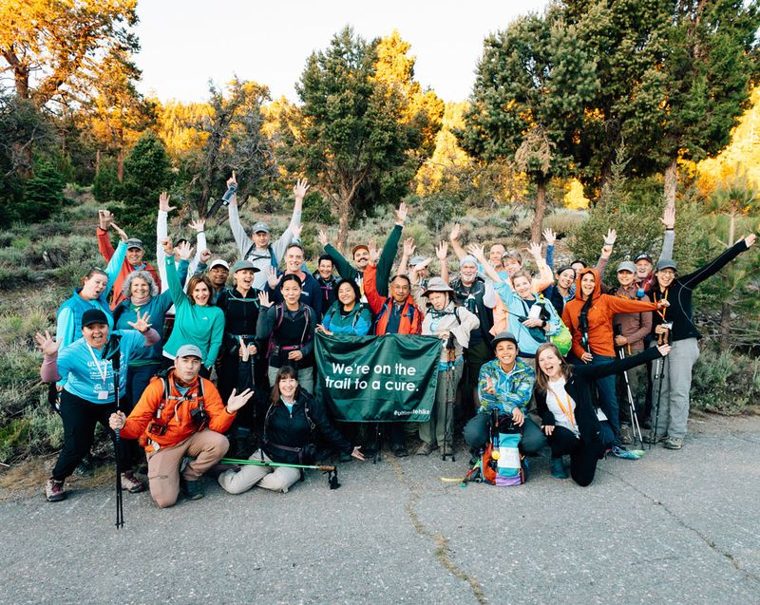
Ultimate Hike participants cheering together on the trail
Kids carrying a banner at a CureSearch Walk
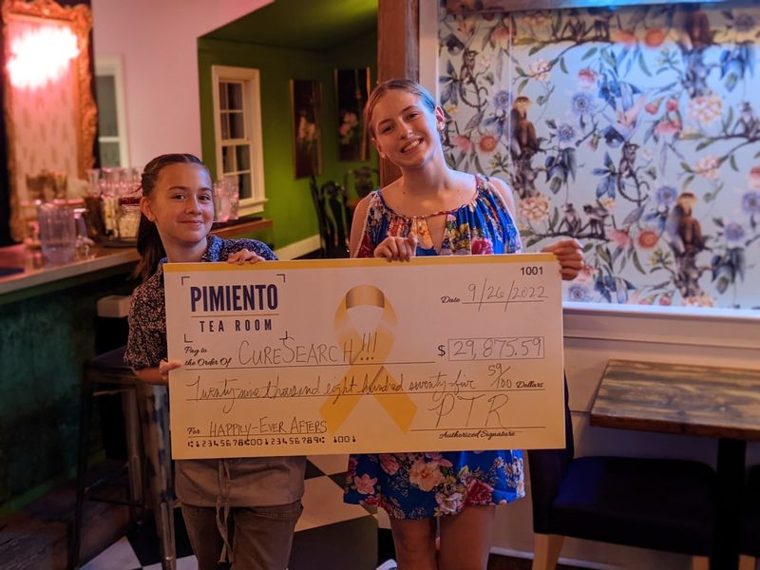
Supporters holding a donation check from a local fundraiser
A young Ultimate Hike participant on the trail
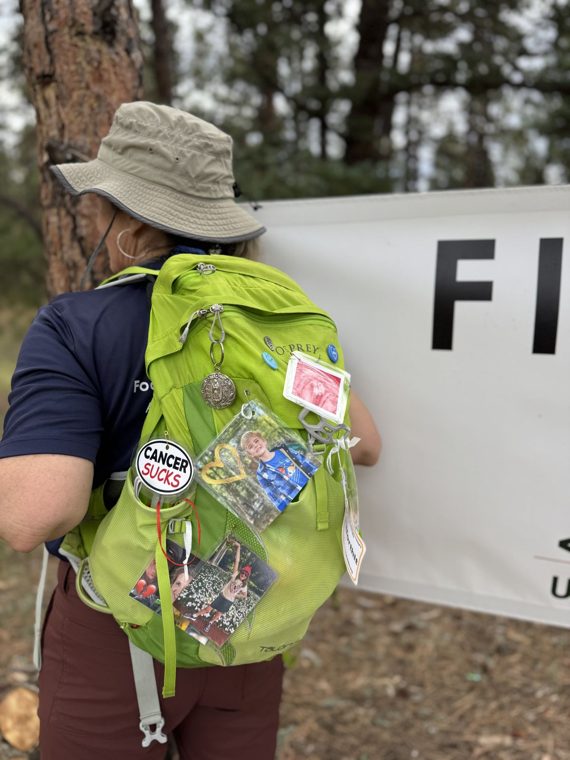
A hiker wearing a backpack covered in CureSearch pins

Share Your Story

Every connection to CureSearch has a story. We’d love to hear yours.

Whether you’ve hiked, given, volunteered, or lived this journey yourself, your story is part of ours.

Share Your Story