Skip to content

Active project

John Prensner, MD, PhD

University of Michigan

Open Reading Frames in ATRT Biology and Therapeutic Response

Dr. Prensner is investigating small open reading frames and the microproteins they produce in atypical teratoid/rhabdoid tumor (ATRT). By uncovering previously overlooked drivers of tumor growth and survival, his team aims to identify new therapeutic targets for this aggressive childhood brain tumor.

CureSearch Young Investigator Award

2025–2027 · Atypical Teratoid Rhabdoid Tumor (ATRT)

John Prensner, MD, PhD

Atypical teratoid/rhabdoid tumor (ATRT) is a rare and aggressive central nervous system tumor that typically forms in the cerebellum or brain stem, areas of the brain responsible for movement, balance, and basic body functions. ATRT primarily affects infants and young children, with the majority of cases diagnosed by age 3. It is one of the most common malignant brain tumors in children under 3, and also one of the deadliest: over half of children diagnosed with ATRT do not survive. Current treatments include surgery, when possible, and chemotherapy, which can be highly toxic in these young patients. The development of new treatment approaches that more specifically and safely target cancer cells is critical for children with ATRT.

John Prensner, MD, PhD is a CureSearch Young Investigator Awardee at the University of Michigan working to develop a deeper understanding of the root causes of pediatric brain tumors, in hopes of identifying novel targets for future therapies. His work includes the study of small open reading frames (sORFs), which are tiny segments of DNA that produce small proteins, or microproteins. These microproteins have been shown to play essential roles in cellular processes, such as regulating gene expression, cell signaling, and response to cellular stress. In cancer cells, the normal process of making proteins can become dysregulated, activating “non-canonical” sORFs that in turn produce microproteins that help cancer cells thrive.

While ATRT contains few known gene targets for treatment, Dr. Prensner believes that sORFs represent an untapped layer of ATRT biology that may inform future therapeutic strategies. He hypothesizes that ATRT cells rely on specific microproteins produced by sORFs to support their growth, and that these proteins could represent novel therapeutic targets for ATRT. In his CureSearch funded work, he will further characterize the role that sORFs play in ATRT and identify those that are critical for cancer cell survival. Additionally, he will explore the potential of certain sORFs to predict if ATRT cells will respond to anti-ribosome targeting therapies – treatments that block a cell’s protein making machinery, reducing the growth and spread of cancer cells.

Dr. Prensner’s work could significantly expand the range of targetable genes in ATRT, paving the way for more personalized treatments. His findings may establish sORFs as biomarkers to identify children with ATRT who might benefit from specific ribosome-targeting therapies. Additionally, it could support a clinical trial of omacetaxine, an FDA-approved ribosome targeting therapy already in use in adults, for children with brain tumors such as ATRT.

As part of CureSearch’s growing co-funding model, Dr. Prensner’s project is generously supported in part by the Jeff Gordon Children’s Foundation and Violet’s Village: The Violet Kenney Legacy Fund at CureSearch.


Project at a glance

Program
Young Investigator Award
Institution
University of Michigan
Focus
Atypical Teratoid Rhabdoid Tumor (ATRT)

The pediatric cancer research community is a special place where scientists, physicians and foundations join together to tackle the toughest problems facing children with cancer. I marvel at the progress that we can make together and I’m encouraged by the results that we are seeing. This CureSearch award will be important for us to continue to develop a new understanding of the childhood cancer genome for atypical teratoid/rhabdoid tumor, which is a highly aggressive brain cancer of young children.

John Prensner, MD, PhD University of Michigan

John Prensner, MD, PhD

Dr. Prensner is a physician-scientist and pediatric hematologist/oncologist specializing in the treatment of children with brain tumors. He is a Principal Investigator of an independent biomedical research laboratory focused on the study of the cancer genome in childhood brain cancers. His research interests focus on the molecular mechanisms and driver genes of brain cancers such as medulloblastoma, atypical teratoid/rhabdoid tumor, and diffuse intrinsic pontine glioma.

Dr. Prensner received his undergraduate degree from Tufts University in 2005 and his medical and doctorate degrees from the University of Michigan in 2014. He completed clinical training in pediatrics in the Boston Combined Residency Program and his clinical fellowship in pediatric hematology/oncology at Boston Children’s Hospital and the Dana-Farber Cancer Institute. After finishing his clinical training, he conducted post-doctoral research at the Broad Institute of MIT and Harvard. He returned to Ann Arbor in 2023 to join the faculty at the University of Michigan. He is board-certified in Pediatrics and Pediatric Hematology/Oncology.

Follow the project’s progress.

Research Update — June 2026

Dr. Prensner and his team continue to make exceptional progress in their investigation of sORFs, previously overlooked segments of the genome that produce tiny proteins that may play important roles in cancer growth and survival.

Over the past six months, they completed the first comprehensive analysis of protein production in ATRT, revealing that different subtypes of the disease regulate protein synthesis in distinct ways. These studies identified more than 15,000 previously unrecognized protein-coding regions within the ATRT genome, dramatically expanding the pool of potential biomarkers and therapeutic targets that could be explored in future studies.

Importantly, the team found evidence that hundreds of these newly identified sORFs may play unique roles in ATRT biology, providing some of the first direct evidence that these regions contribute to how the disease develops and behaves. Together, these findings establish an important foundation for identifying new biomarkers and therapeutic targets for children with ATRT. In the coming months, the team will use CRISPR-based screening approaches to determine which of these newly discovered sORFs are essential for tumor growth and survival and continue evaluating how they influence response to omacetaxine, a ribosome-targeting therapy that may represent a promising new treatment strategy for children with this devastating disease.

Help move the next discovery forward

Research progress happens one milestone at a time.

Your support helps researchers test, refine, and advance better treatment ideas for children with cancer.

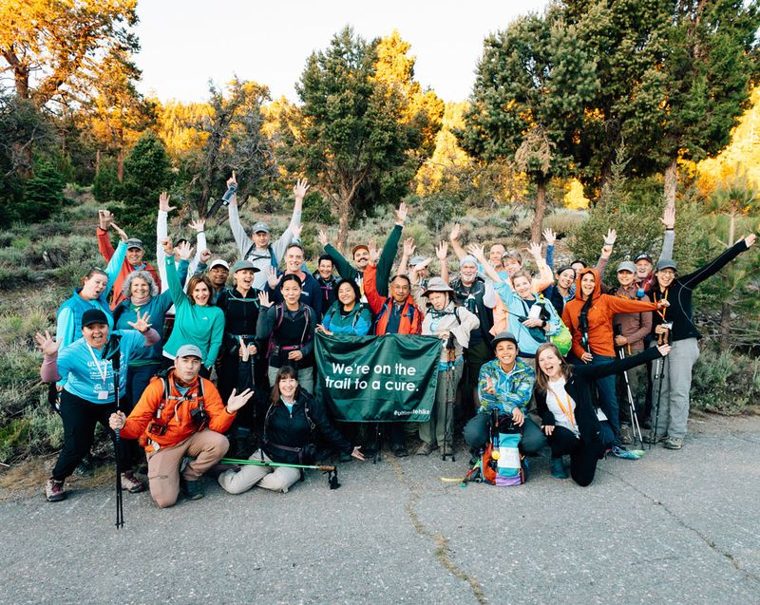
Ultimate Hike participants cheering together on the trail
Kids carrying a banner at a CureSearch Walk
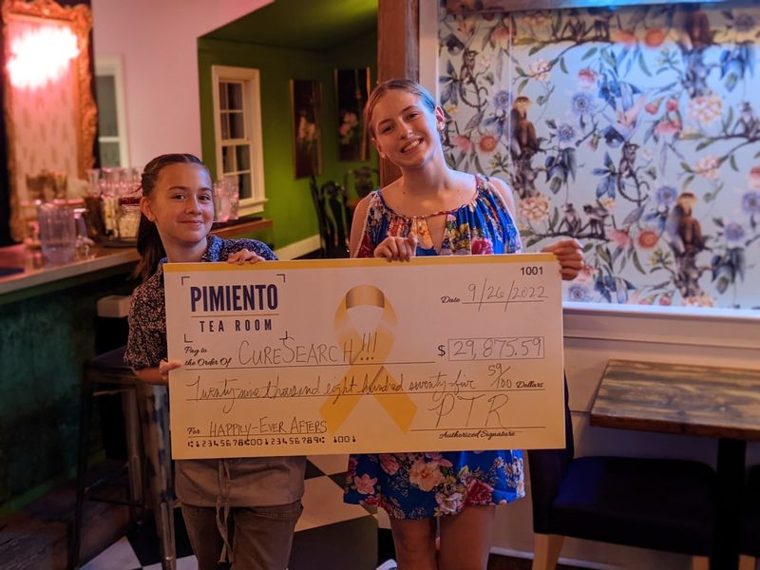
Supporters holding a donation check from a local fundraiser
A young Ultimate Hike participant on the trail
A hiker wearing a backpack covered in CureSearch pins

Share Your Story

Every connection to CureSearch has a story. We’d love to hear yours.

Whether you’ve hiked, given, volunteered, or lived this journey yourself, your story is part of ours.

Share Your Story