
Brain Cancers in Children
Understanding childhood brain and spinal cord tumors.
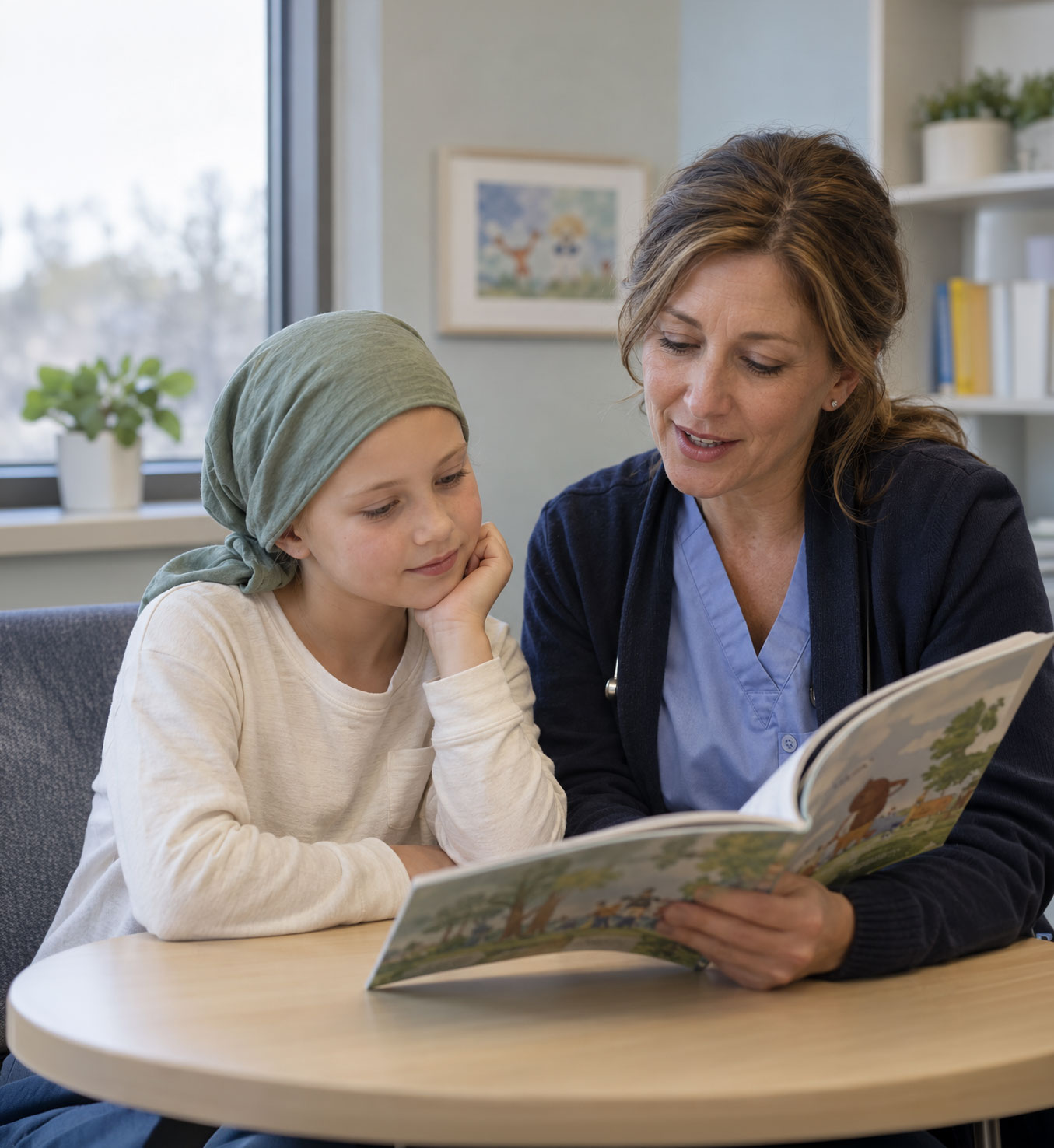
Brain and spinal cord tumors form when abnormal cells grow in the central nervous system (CNS). Some are cancerous and others are noncancerous, but both can affect important functions and require specialized care. Brain and spinal cord tumors are the most common solid tumors in children.
Treatment depends on the type of tumor, where it develops, its biological features, and how it responds to treatment. Treatment may include surgery, chemotherapy, radiation therapy, targeted therapies, or a combination of approaches. While outcomes have improved for some childhood brain tumors, others remain very difficult to treat, and treatment itself can affect a child’s learning, movement, growth, and long-term health. Research is focused on developing more effective treatments while reducing these lasting effects.
Types of childhood brain and spinal cord tumors
-
Gliomas, including astrocytomas
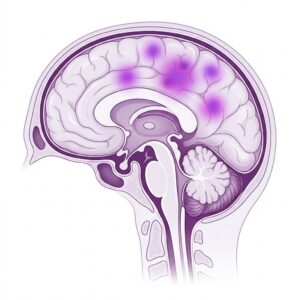
Gliomas are a group of tumors that develop from cells that support nerve cells in the brain and spinal cord. Astrocytomas are one type of glioma. Low-grade gliomas generally grow slowly, while high-grade gliomas tend to grow more quickly.
-
Diffuse midline glioma (DMG) and DIPG
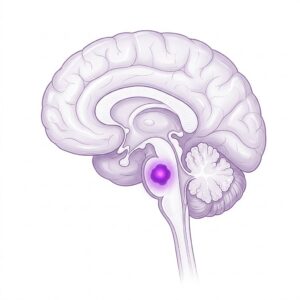
Diffuse midline glioma (DMG) is a fast-growing glioma that forms in structures near the center of the brain or in the spinal cord. Diffuse intrinsic pontine glioma (DIPG) develops in the pons, part of the brainstem. Many DIPGs are classified as DMG.
-
Medulloblastoma
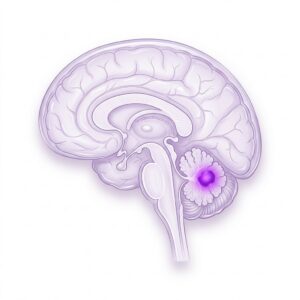
Medulloblastoma is a fast-growing cancer that begins in the cerebellum, the part of the brain that helps control balance and movement. It can spread to other areas of the brain and spinal cord.
-
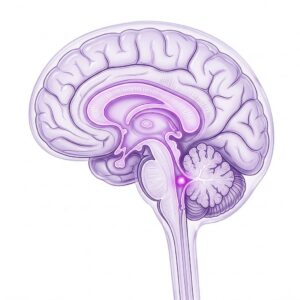
Ependymoma
Ependymoma develops from cells that line the fluid-filled spaces and passageways in the brain and spinal cord. It can occur in different parts of the central nervous system.
-
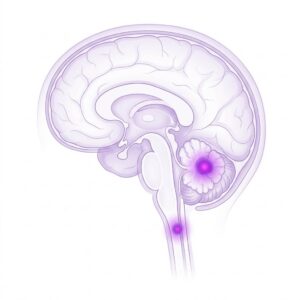
Atypical teratoid/rhabdoid tumor (ATRT)
ATRT is a rare, fast-growing cancer of the brain or spinal cord. It most often affects infants and very young children, although it can occur at older ages.
-
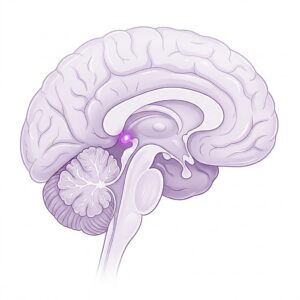
Pineoblastoma
Pineoblastoma is a rare, fast-growing cancer that forms in the pineal gland, a small structure near the center of the brain that helps regulate sleep.
-
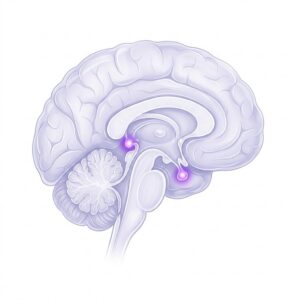
Central nervous system germ cell tumors
Central nervous system germ cell tumors develop from germ cells found in the brain. They often form near the pineal or pituitary gland and are more common in adolescents.
-
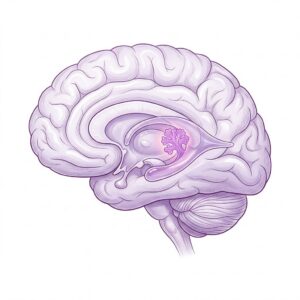
Choroid plexus tumors
Choroid plexus tumors develop in the tissue that makes the fluid surrounding the brain and spinal cord. They include both noncancerous tumors, called choroid plexus papillomas, and cancerous tumors, called choroid plexus carcinomas.
-
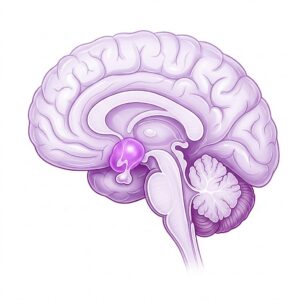
Craniopharyngioma
Craniopharyngioma is a noncancerous tumor that forms near the pituitary gland and hypothalamus. Although it is not cancerous, it can grow and press on nearby structures in the brain and cause serious health problems.
Research for better treatments
Brain tumors and their treatment can affect a child’s learning, movement, growth, and long-term health. Some tumors remain difficult to treat or can return after treatment. CureSearch funds research aimed at developing more effective, less-toxic treatments and bringing promising approaches into clinical testing.
Explore our funded brain tumor research
-

Finding new targets in an aggressive childhood brain tumor
John Prensner, MD, PhD
Dr. Prensner’s CureSearch-funded research investigates small proteins that may help atypical teratoid/rhabdoid tumor (ATRT) cells grow and survive. By identifying which of these proteins tumor cells depend on, his team aims to uncover new treatment targets for this rare brain cancer.
-
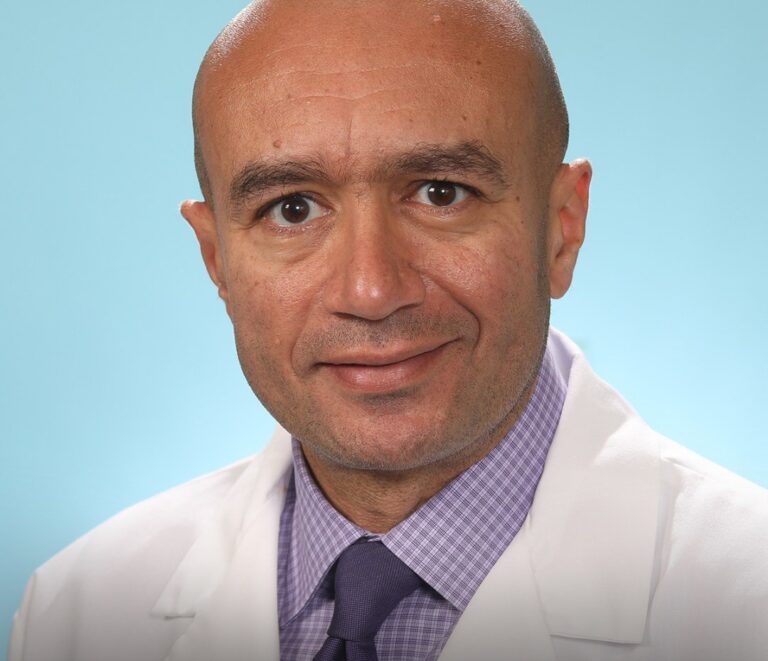
Testing immunotherapy for recurrent brain tumors
Mohamed S. Abdelbaki, MD
CureSearch supports Dr. Abdelbaki’s early-phase trial of natural killer (NK) cells from healthy donors, prepared to resist signals that tumors use to weaken the immune response. The study evaluates safety and looks for early signs of activity against brain tumors that have returned after treatment.
Make a difference
Help make better treatments possible
Children with brain and spinal cord tumors need treatments that not only fight their disease but also protect their future health. Your gift to CureSearch supports research toward more effective, less-toxic treatments for children with cancer, including brain tumors. Help move promising science toward better options for children and families.


