Skip to content

Active project

David Munn, MD

Medical College of Georgia at Augusta University

Combined IDO and BTK Inhibition for Immunotherapy of Pediatric Brain Tumors

Dr. Munn’s team is evaluating chemotherapy alongside two drugs intended to strengthen the immune system’s response to cancer. The clinical trial examines whether this combination can help overcome treatment resistance in children with recurrent brain tumors, while assessing safety and determining appropriate dosing.

CureSearch Catapult Award

2023–2025 · Pediatric Brain Tumors; Immunotherapy; Novel Agent, Combination Therapy

David Munn, MD

Brain tumors are the most common solid tumor of childhood. However, for glioblastoma, medulloblastoma, and ependymoma the cure rate remains only 60-70%. Once pediatric brain tumors recur or progress, the disease is usually rapidly fatal. Repeated cycles of chemotherapy can lead to resistance. However, the immune response differs fundamentally from the response to chemotherapy in that repeated cycles of immunotherapy may actually increase the beneficial anti-tumor effects. A suitably activated immune system is capable of allowing otherwise ineffective chemotherapy to now become potent and effective.

David Munn, MD, from Augusta University, is conducting an open-label Phase 1b study to test if adding ibrutinib can restore systemic immune activation and functional anti-tumor activity in patients 12 to 25 years old with brain cancer who are highly resistant, actively progressing, and have already become resistant to chemoimmunotherapy with indoximod alone. The trial comprises a dose-finding cohort to establish safety and dosing of ibrutinib, then an expansion cohort to evaluate the efficacy of the combination.

This project is supported in part by the Rally Foundation for Childhood Cancer Research.

Project at a glance

Program
Catapult Award
Institution
Medical College of Georgia at Augusta University
Focus
Pediatric Brain Tumors; Immunotherapy; Novel Agent, Combination Therapy

We chose brain cancer because it was a completely understudied or underserved field. Until today, there’s just no accepted standard pathway to deal with any relapse brain cancer. So it was a population of patients who seemed best positioned to benefit from new modalities of therapy.

David Munn, MD Medical College of Georgia at Augusta University

David Munn, MD

Dr. David Munn is a Professor of Pediatric Oncology at August University and Co-Director of the Pediatric Immunotherapy Program. Dr. Munn is a physician-scientist with a focus on discovering new molecular targets for tumor immunotherapy. His basic-science laboratory has over a 20- year track record in revealing innovative molecular and cellular mechanisms of immunosuppression and acquired tolerance in tumor-bearing hosts.

The Pediatric Immunotherapy Program (PIP) is designed specifically as a “destination” program to provide highly-specialized experimental immunotherapy treatments for children with cancer from around the country who may not have other options for continued therapy. Since its inception, the PIP has provided access to unique immunotherapy treatment for more than 150 children and young adults coming from more than 25 different States in the US.

Dr. Munn’s team was the first to demonstrate the role of the Indoleamine 2,3-Dioxygenase (IDO) pathway as a paradigmatic example of this fundamental “immunity-versus-tolerance” decision, and show its relevance to tumors. They also developed the first-in-class IDO-inhibitor drug (indoximod) and brought it to Phase I and Phase II trials.

Follow the project’s progress.

Research Update — May 2026

Building on their prior progress, Drs. Munn and Johnson have continued enrollment and treatment in their Phase 1 trial, with 19 of the planned 31 patients now enrolled.

Enrollment is expected to accelerate over the coming months, as this becomes the primary trial for newly referred patients. The trial has expanded to include a second, less toxic chemotherapy regimen, alongside ongoing optimization of ibrutinib dosing to define the most effective and tolerable combination—providing important flexibility as the program moves toward future multi-center studies. With the removal of the previous age restriction, younger patients are now being enrolled and are tolerating treatment well, further broadening access to this approach.

As the team prepares for the next stage of development, they have made significant regulatory progress advancing the next-generation pro-drug formulation of indoximod, including securing Rare Disease designation in both medulloblastoma and ependymoma. This designation is an important step that can facilitate drug development and enable eligibility for priority review incentives. An application for Orphan Drug designation has been submitted, which, if granted, would provide key benefits such as market exclusivity and additional regulatory support, and plans are underway to pursue Breakthrough Therapy designation to enable closer collaboration with the FDA and potentially accelerate the path to approval. Additionally, the team has engaged in multiple discussions with the FDA to support a future registration-directed trial. A one-year no-cost extension has been granted to complete enrollment, finalize dose optimization, and generate critical immune biomarker data which will support IND-enabling studies and the future transition to a Phase II trial.
Help move the next discovery forward

Research progress happens one milestone at a time.

Your support helps researchers test, refine, and advance better treatment ideas for children with cancer.

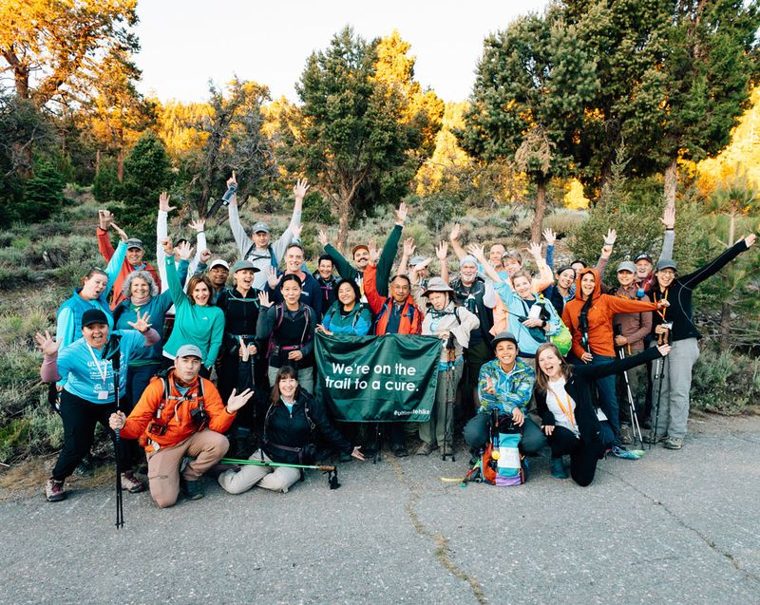
Ultimate Hike participants cheering together on the trail
Kids carrying a banner at a CureSearch Walk
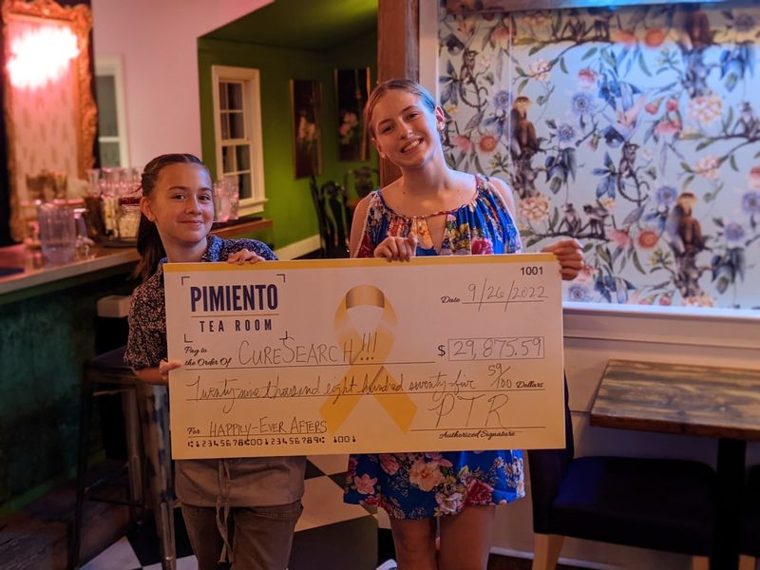
Supporters holding a donation check from a local fundraiser
A young Ultimate Hike participant on the trail
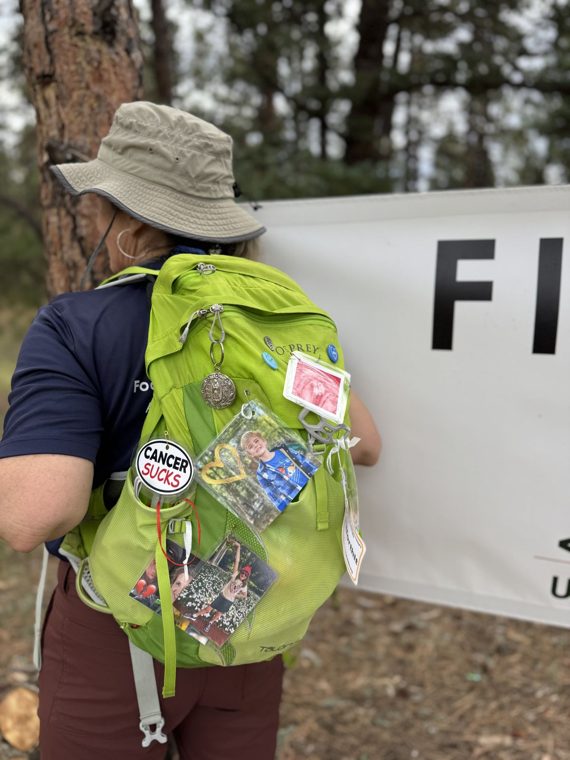
A hiker wearing a backpack covered in CureSearch pins

Share Your Story

Every connection to CureSearch has a story. We’d love to hear yours.

Whether you’ve hiked, given, volunteered, or lived this journey yourself, your story is part of ours.

Share Your Story