Skip to content

Completed project

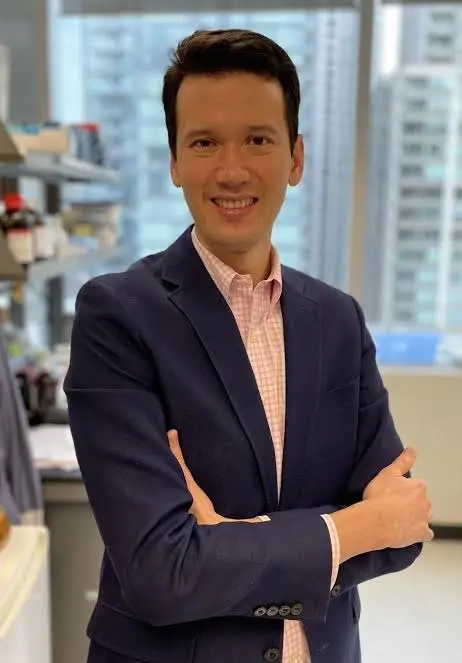
Elvin Wagenblast, PhD

Icahn School of Medicine at Mount Sinai

Targeting Therapy Resistance in NUP98-NSD1 Rearranged Childhood Leukemia

Dr. Elvin Wagenblast is an Assistant Professor at the Department of Oncological Sciences and Pediatrics at the Icahn School of Medicine at Mount Sinai.

CureSearch Young Investigator Award

2023–2025 · Pediatric Leukemia

Elvin Wagenblast, PhD

This project is supported by Team Steve: The Steven Crowe Legacy Fund.

Leukemia is the most frequent cancer in children. Although acute myeloid leukemias (AMLs) only account for 20% of pediatric acute leukemias, it is the leading cause of childhood leukemia mortality. NUP98-NSD1 rearranged leukemia is observed in about 15% of cytogenetically normal pediatric AML cases and represents a poor prognostic group. There is a critical need to identify and characterize novel therapeutic interventions in cases where standard chemotherapy is ineffective in children with AML.

Elvin Wagenblast, PhD, from the Icahn School of Medicine at Mount Sinai, is approaching the study of pediatric leukemia in a different way by characterizing the evolution of leukemia from a developmental perspective. His team is researching the molecular mechanisms of NUP98-NSD1 rearranged pediatric AML using an innovative CRISPR/Cas9 mediated genomic engineering approach in human blood stem cells obtained from cord blood to model leukemia initiation and progression. The team is working to identify and characterize novel therapeutic targets that prevent leukemic maintenance and progression in NUP98-NSD1 rearranged leukemia.

Project at a glance

Program
Young Investigator Award
Institution
Icahn School of Medicine at Mount Sinai
Focus
Pediatric Leukemia

My vision is to understand the earliest steps of how and why childhood leukemia initiates and to use this knowledge to innovate therapeutic intervention focused on targeting the preleukemic and leukemic phase.

Elvin Wagenblast, PhD Icahn School of Medicine at Mount Sinai

Elvin Wagenblast, PhD

Dr. Elvin Wagenblast is an Assistant Professor at the Department of Oncological Sciences and Pediatrics at the Icahn School of Medicine at Mount Sinai. He is a member of the Black Family Stem Cell Institute, the Tisch Cancer Institute, and the Mindich Child Health and Development Institute. His research program focuses on using human primary blood stem cells and CRISPR/Cas9-mediated genome engineering to model preleukemic and leukemic phases of pediatric acute myeloid leukemia.

The central question of Dr. Wagenblast’s laboratory is to understand how a normal blood stem cell can become cancerous. In leukemia, the initiating genetic mutations occur as early as during fetal development. Dr. Wagenblast’s team applies CRISPR/Cas9 genome editing technologies in human primary blood stem cells to model the preleukemic and leukemic phases of acute myeloid and acute lymphoblastic leukemia in vivo. By combining human patient material and state-of-the-art genome editing approaches, he aims to uncover insights into the genetic, cellular and developmental mechanisms of leukemia, with a particular focus on childhood leukemia. These strategies allow us to uncover novel disease mechanisms and identify therapeutic vulnerabilities of the disease.

Follow the project’s progress.

Final Research Update

Through his Young Investigator Award, Dr. Wagenblast made significant advances in understanding why an aggressive form of AML caused by NUP98 gene fusions occurs almost exclusively in infants and young children.

Using innovative humanized stem cell models, his team demonstrated that these leukemias arise only from the earliest blood stem cells during development, providing a long-sought explanation for their pediatric origins. They also identified a key survival program driven by the protein PRDM16 that allows leukemia stem cells to fuel themselves, resist treatment, and drive disease relapse. Building on these findings, the team showed that the FDA-approved drug venetoclax, particularly when combined with chemotherapy, could eliminate the leukemia stem cells responsible for relapse in preclinical models. They also developed a promising new targeted approach that blocks the production of PRDM16, selectively killing leukemia cells while largely sparing healthy blood-forming cells. Together, these findings provide a strong rationale for future clinical studies and lay the foundation for new treatment strategies that could improve outcomes for children with this devastating form of AML.
Help move the next discovery forward

Research progress happens one milestone at a time.

Your support helps researchers test, refine, and advance better treatment ideas for children with cancer.

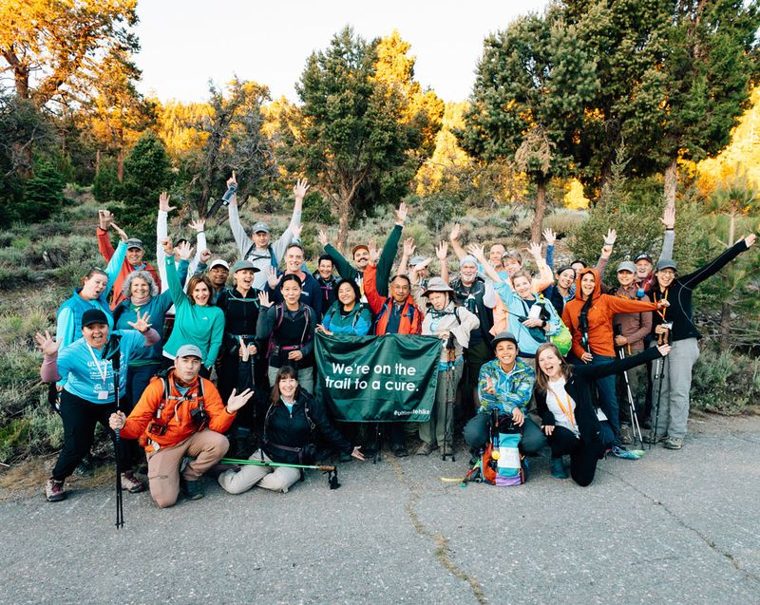
Ultimate Hike participants cheering together on the trail
Kids carrying a banner at a CureSearch Walk
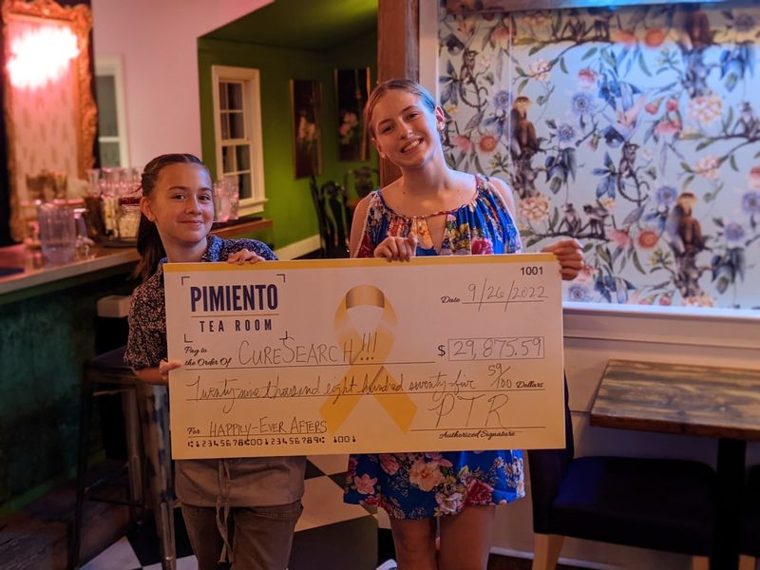
Supporters holding a donation check from a local fundraiser
A young Ultimate Hike participant on the trail
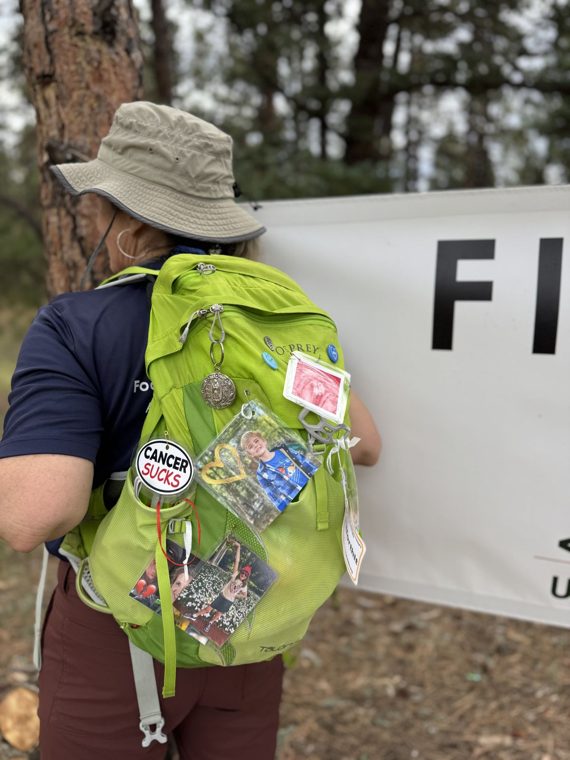
A hiker wearing a backpack covered in CureSearch pins

Share Your Story

Every connection to CureSearch has a story. We’d love to hear yours.

Whether you’ve hiked, given, volunteered, or lived this journey yourself, your story is part of ours.

Share Your Story