Skip to content

Completed project

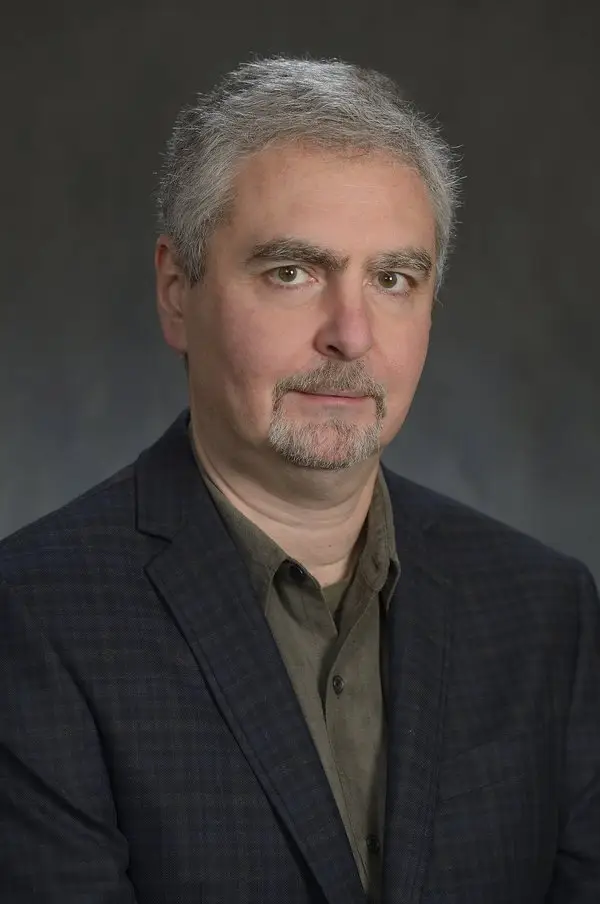
Andrei Thomas-Tikhonenko, PhD

Children’s Hospital of Philadelphia

Targeting Splicing-Derived Neo-Epitopes in High-Risk Pediatric Cancers

CureSearch Acceleration Initiative Award

2022–2025 · High-Risk Pediatric Cancers – Neuroblastoma and Diffuse Midline Glioma

Andrei Thomas-Tikhonenko, PhD

For this work, Dr. Andrei Thomas-Tikhonenko chose two malignancies, based on the existence of validated targets, the availability of high-quality RNA-Seq data and primary samples, strong expertise of collaborators, and – last but not least – urgent and unmet clinical need:

Neuroblastoma: Children diagnosed with neuroblastoma are typically younger than 5 years old. Most high-risk neuroblastoma patients die despite intensive cytotoxic therapies, and survivors are burdened with treatment-related long-term effects. A child diagnosed with neuroblastoma today is subjected to a highly intensive regimen of toxic chemotherapeutics, radiation therapy, and an immunotherapy that, while effective, is toxic, with pain and anaphylaxis commonly leading to drug discontinuation. Return of the disease still occur sin at least half of the treated patients.

Diffuse Midline Glioma: Pediatric brain tumors are a leading cause of cancer death in children in the U.S. and diffuse midline glioma (DMG) is one of the most defiant to traditional therapies and these tumors can also be impossible to surgically remove. Currently, there are no effective standard of care therapies for DMG, despite decades of clinical trials. Children affected by DMG nearly universally succumb to the disease within 8-10 months of diagnosis.

Andrei Thomas-Tikhonenko, PhD, is a CureSearch Acceleration Initiative Awardee conducting research at the Children’s Hospital of Philadelphia. Pediatric cancers, both hematologic and solid, typically have low mutation burden. This could make them invisible to the immune system which is trained to recognize foreign molecules. Therefore, immune checkpoint inhibitors, which have revolutionized cancer treatments in adults, have gained virtually no traction in the realm of childhood malignancies. Antibody-based immunotherapies like CAR T-cell therapy use markers on the surface of cancer cells that differentiate them from normal cells as targets for the immune system. Determining markers that are different from normal cells is essential so that the therapy is tumor-specific and does not damage normal cells. In many tumors, because they are derived from our own cells, it can be hard to find such markers. Dr. Thomas-Tikhonenko and his colleagues will identify novel immunotherapy targets resulting from a process called aberrant splicing. This process results in protein variants that are not found in normal cells. Because these altered cell surface proteins are not found on normal cells, they are an excellent, specific target for immunotherapy. Therapeutics that are developed during this project to recognize these cancer-specific cell-surface proteins will be able to either direct the immune system to destroy cancer cells or deliver therapeutics to the tumor while minimizing damage to normal cells resulting in fewer instances of dose-limiting toxicity and more effective therapy.

Project at a glance

Program
Acceleration Initiative Award
Institution
Children’s Hospital of Philadelphia
Focus
High-Risk Pediatric Cancers – Neuroblastoma and Diffuse Midline Glioma

Andrei Thomas-Tikhonenko, PhD

My laboratory has a long-standing interest in pathobiology of solid and hematopoietic malignancies, in particular lymphomas and leukemias and other cancers driven by MYC overexpression. I trained in the MYC field in the early ’90s as post-doctoral Research Associate and then Leukemia Society Special Fellow at the renowned Fred Hutchinson Cancer Research Center in Seattle. In 1997, I was recruited to the University of Pennsylvania, where I rose through the ranks to become tenured Professor of Pathology & Laboratory Medicine. For over 20 years, I have been continuously funded by NCI, beginning with the NIH FIRST Award (R29) and ending with 2 recently completed R21s and currently active R01 and U01 grants. In addition, I have received grants from numerous private foundations including American Cancer Society, Swiss Cancer League, Leukemia & Lymphoma Society, Alex’s Lemonade Stand Foundation, WW Smith Charitable Trust, The V Foundation, William Lawrence & Blanche Hughes Foundation, and St Baldrick’s Foundation.

This robust extramural support allowed me to maintain an active lab, currently composed of four postdoctoral fellows, one Hem-Onc fellow, two bioinformatics scientists, three thesis-level graduate students, and one technician. We publish our work in top-notch journals, including Nature Genetics, Nature Immunology, Journal of Clinical Investigation, Journal of the National Cancer Institute, Blood, Cancer Research, etc. Of the Top 10 most frequently cited 2005-2014 MYC papers, my laboratory co-authored 3, which were cited >2,000 times.Twelve years ago, I moved my lab across campus to The Children’s Hospital of Philadelphia, where it became an integral part of the Center for Childhood Cancer Research.

This integration allowed me to foster new collaborations with key physician-scientists and pursue several translational projects. Because of my contributions to the field of immunobiology, in 2013 I became Investigator of the multi-institutional Stand Up to Cancer-St. Baldrick’s Pediatric Cancer Dream Team and as a key member of that group received the 2021 AACR Team Science Award. This and other partnerships solidified my commitment to team science, of which the current application is but the most recent example.

Collaborators

  • Stephan Grupp – The Children’s Hospital of Philadelphia
  • Yael Mossé – The Children’s Hospital of Philadelphia
  • Adam Resnick – The Children’s Hospital of Philadelphia
  • Yoseph Barash – University of Pennsylvania
  • Jamie Spangler – Johns Hopkins University

Follow the project’s progress.

Final Update

Dr. Thomas-Tikhonenko and his team set out to identify new, highly-specific targets for immunotherapy in high-risk pediatric cancers, such as diffuse midline glioma (DMG), where current treatments are limited and often ineffective.

Rather than focusing on common proteins also found in healthy cells, the team identified unique tumor-specific protein variants created through abnormal mRNA splicing, which are present on the surface of cancer cells but largely absent from normal tissue. The team identified dozens of these targets and prioritized a novel variant of NRCAM, a cell adhesion protein, that is consistently found across pediatric high-grade glioma samples and plays an essential role in driving tumor growth.

Building on this finding, the team developed a first-in-class antibody that selectively recognizes this NRCAM variant and demonstrated that it can effectively trigger immune cells to attack tumor cells while sparing healthy brain tissue, a crucial step toward safer, more precise therapies. Additionally, they engineered CAR T cells targeting this variant, which showed strong anti-tumor activity in preclinical studies. This work establishes a promising new approach for targeting aggressive pediatric brain tumors and lays the foundation for advancing these therapies toward clinical testing. Importantly, support from CureSearch enabled these discoveries and helped position the team to secure additional funding from the National Cancer Institute, as well as other sources, to further advance this work toward the clinic.
Help move the next discovery forward

Research progress happens one milestone at a time.

Your support helps researchers test, refine, and advance better treatment ideas for children with cancer.

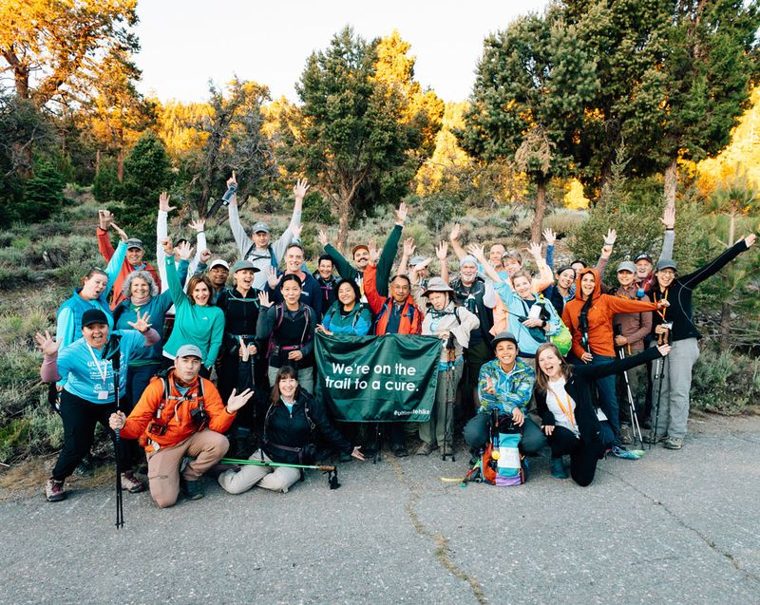
Ultimate Hike participants cheering together on the trail
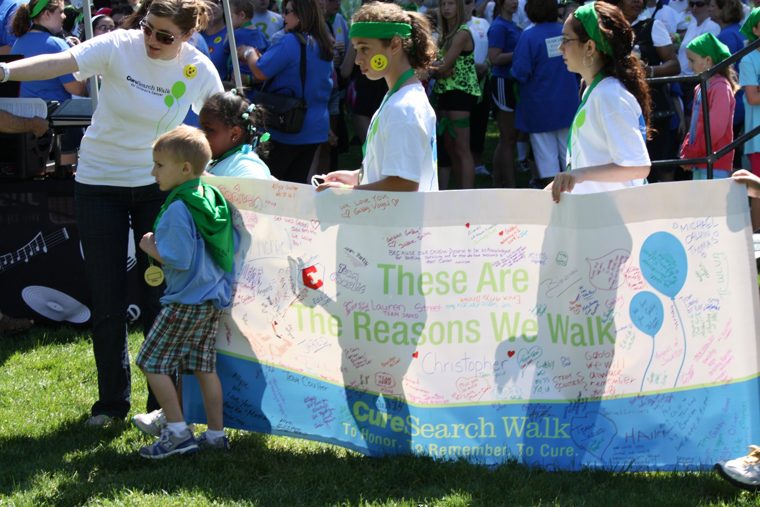
Kids carrying a banner at a CureSearch Walk
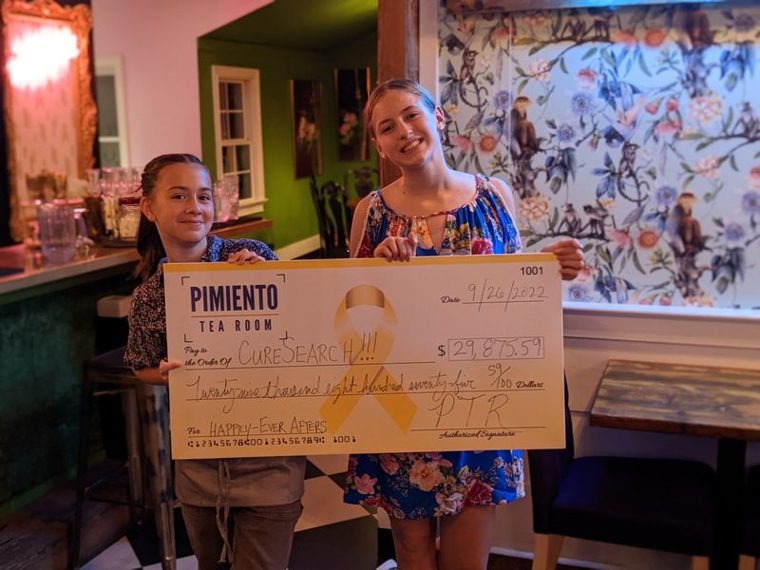
Supporters holding a donation check from a local fundraiser
A young Ultimate Hike participant on the trail
A hiker wearing a backpack covered in CureSearch pins

Share Your Story

Every connection to CureSearch has a story. We’d love to hear yours.

Whether you’ve hiked, given, volunteered, or lived this journey yourself, your story is part of ours.

Share Your Story